The Vinitaly International Academy (VIA) runs a program of educational field trips and immersive wine tours for certified Italian Wine Ambassadors, experts, and students. These trips take participants directly into famous Italian wine regions—such as Sicily (Etna), Sardinia, or Campania (Irpinia)—to study local terroirs, native grape varieties, and wine-making traditions firsthand. Activities go beyond standard classroom lectures, featuring winery visits, technical tastings with top producers, and regional food-and-wine experiences (such as traditional local cheesemaking or vineyard walks). They also serve as a practical, experiential networking event for the global VIA community to deepen their knowledge of Italy’s 20-region wine biodiversity alongside peers and faculty. Written by Kim Berdusco IWA and Miki Yuzawa IWA, this is their account of Day 3 of a recent field trip to Irpinia in the Southern Italian region of Campania.
Macchie Santa Maria Cantine
Founded in 2010, this family-run winery builds on three generations of grape growing and works with Irpinia’s principal indigenous varieties including Aglianico, Fiano, Greco and Falanghina.
The visit began in the vineyards spread across the surrounding hills. Some of the estate’s older parcels are around 21 years old with Aglianico trained using the “cordone speronato” system. Taurasi is grown on clay soils, Greco grapes on ash volcanic soils and Fiano grapes on limestone soils.
During the tasting, the 2024 Falanghina sparkling wine showed fresh citrus, green apple and pear with juicy fruit and vibrant acidity creating a refreshing style. Fiano, by contrast, was fuller-bodied with ripe fruit reminiscent of tropical fruit and grapefruit, supported by firm acidity and greater texture. Both Fiano and Greco show considerable potential for aging and it was interesting to see an approach that looks beyond youthful fruit expression towards their development over time.
The vineyards dedicated to Evocatus Taurasi Riserva DOCG, the flagship cuvée of the Macchie Santa Maria winery, are situated at an altitude of approximately 440 to 450 meters above sea level. Due to Aglianico’s naturally late-ripening character, harvest takes place from late October to early November. The long ageing of 12 months in stainless steel followed by 36 months in tonneau (a 400- to 500-liter French oak barrel) and 12 months in the bottle help to soften the tannin structure and show the ageing potential that defines Taurasi wines.
Both Aglianico’s capacity for long aging and the breadth of Irpinia’s indigenous varieties were noteworthy aspects of this visit. Altitude, late ripening, high levels of acidity and above all the element of “time” are all key characteristics of the wines of Irpinia.
Giovanni Carlo Vesce
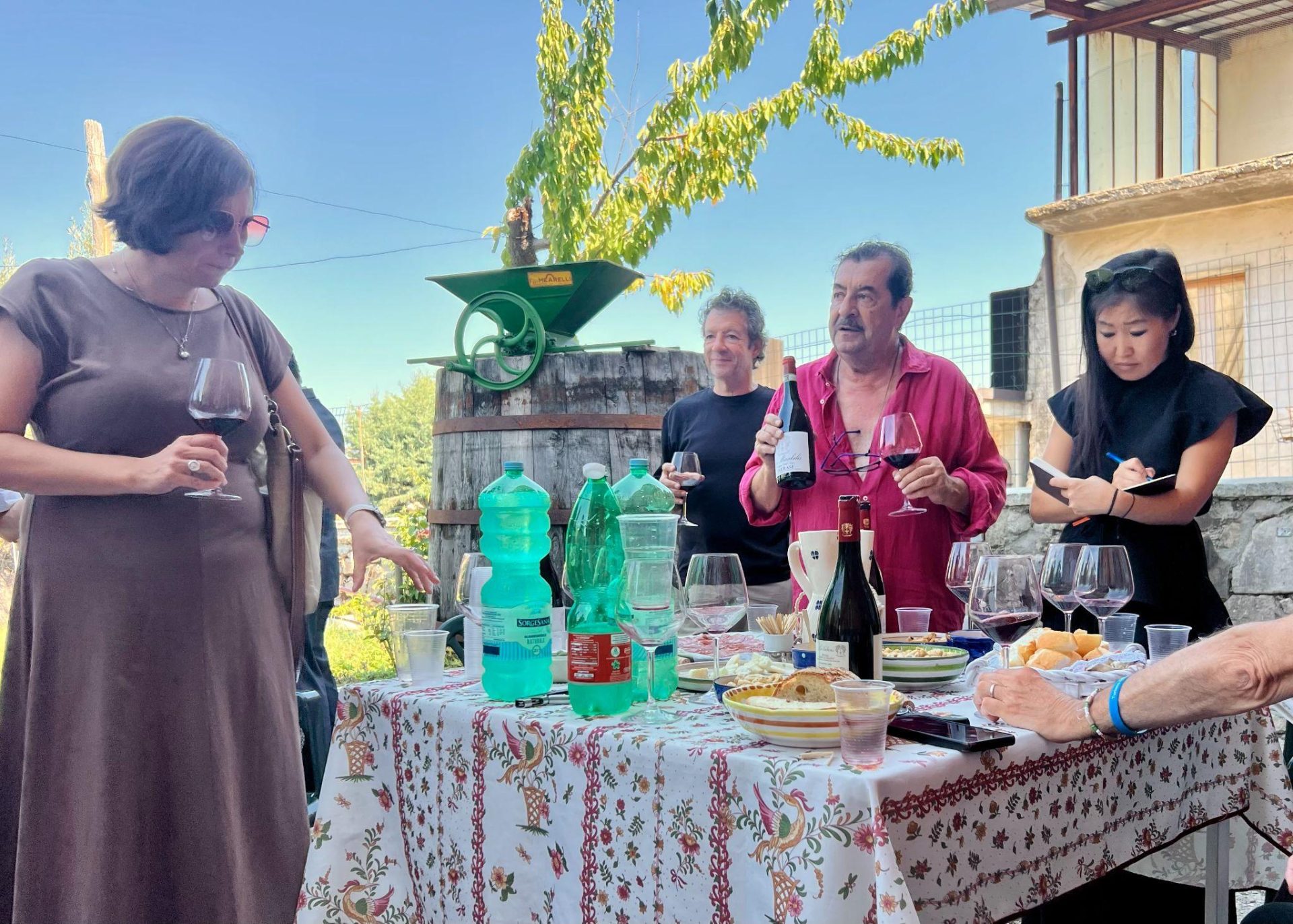
Next we went to Giovanni Carlo Vesce, a family run winery focusing exclusively on wines produced from Aglianico. JC, the winery’s owner, led us through one of the vineyards, where we saw and tasted the Aglianico grapes firsthand. JC does much of the vineyard work at the winery and has hired an enologist (Vincenzo Mercurio) as a consultant winemaker.
We sampled three of his wines. Case Arse, a single vineyard wine under the Irpinia Campi Taurasini DOC with only 2,000 bottles produced. We also tasted Leo Cubans, named after the vineyard location but also meaning to “lay down” supporting the notion that Aglianico wines need time to express themselves and soften their tannic structure. Lastly, we tasted the Leo Mirabilis Taurasi DOCG wine. All wines showed classic Aglianico structure and body with notes of dark cherry, licorice, spice and volcanic minerality. They were paired with a lovely selection of local appetizers, olives and taralli.
Tenuta Cavalier Ferrante
We started our visit at Tenuta Cavalier Ferrante with a tour of the wine museum showing the history of the winery and the region. One display highlighted the effects of climate change on grape growing, which was particularly illuminating in the current context.
We were then transported to the vineyard, where classical music was being played! The winemaker is a classical musician, and each wine is named after a different musical term. We started with a taste of Virga, a floral and fruity Falanghina based wine. We then tasted Scandicus, a Fiano di Avellino DOCG wine with fresh crisp stone fruit flavours and a lovely phenolic grip on the finish. Next, we tried the Podatus, a Greco di Tufo DOCG with deeper colour, firm structure and a long finish. We also tried Clivis (Irpinia Aglianico) and Michanto (Campi Taurasini) and Tenor (Taurasi DOCG). The Aglianico wines all showed the characteristic deep black cherry and spice flavours with more structure and longer finish as we progressed through the tasting. All the wines were served with a varied assortment of charcuterie, olives and bread.
Feudi di San Gregorio
At Feudi di San Gregorio, we had the privilege of being personally guided through the winery and cellar by Antonio Capaldo, President of Feudi di San Gregorio.
One of the most fascinating features was an installation, displaying the wines of Piano di Montevergine, Cutizzi, Pietracalda and Serrocielo alongside the actual soil profiles from their respective vineyards. The striking differences in colour, particle size, stone content and structure made it easy to understand how dramatically the soil can vary within Irpinia and how each wine can be seen as an expression of a specific place and soil.
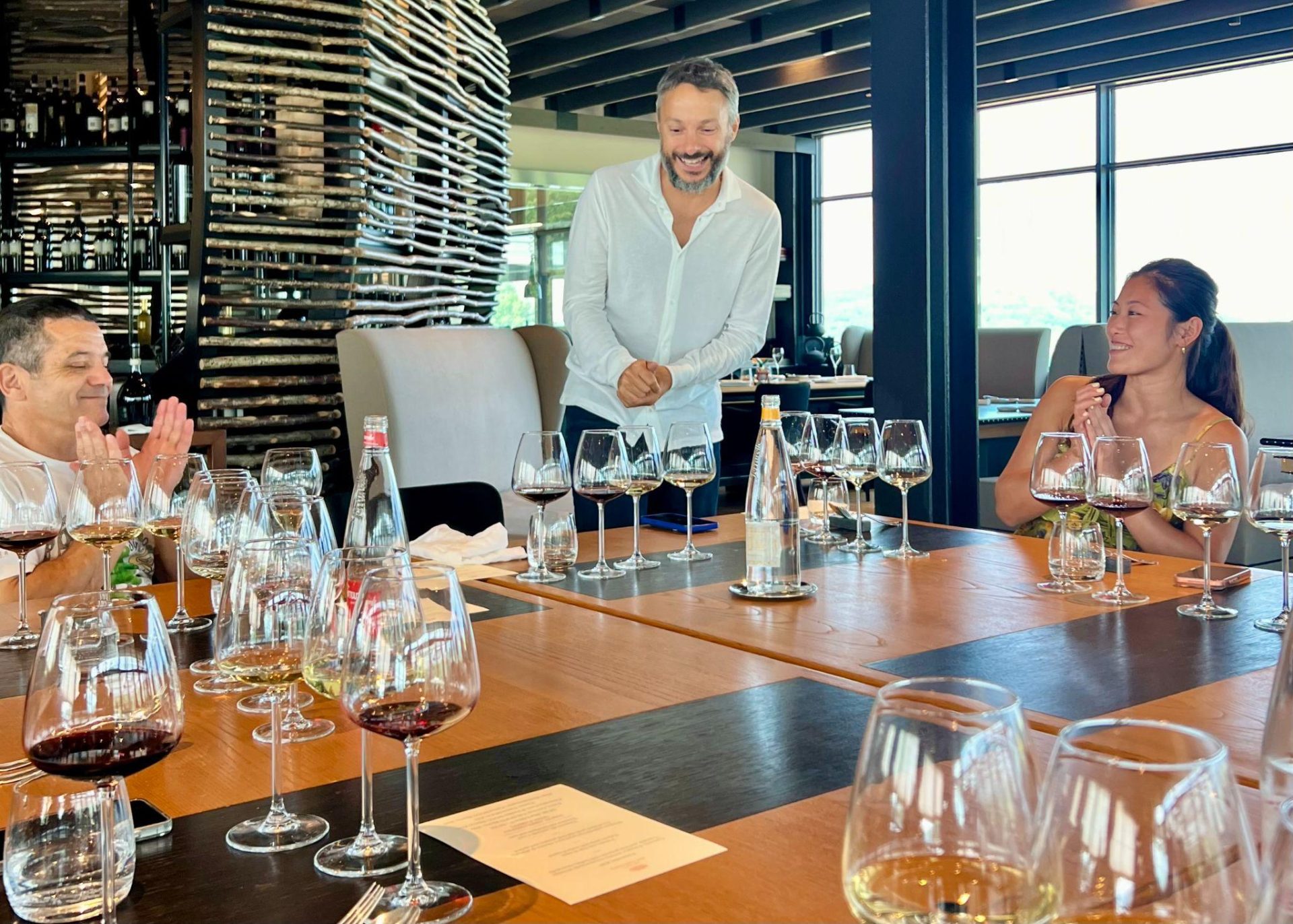
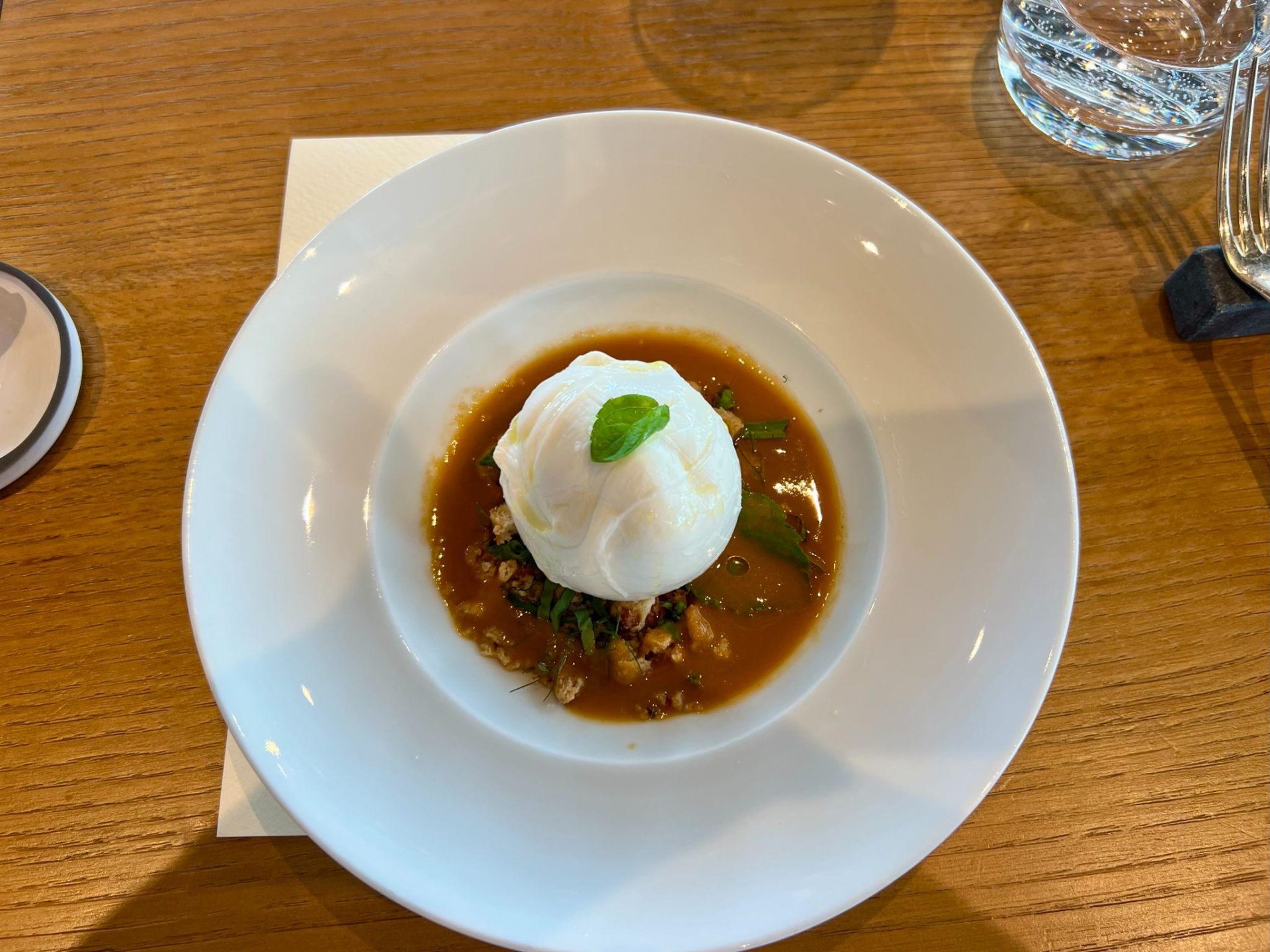
Following the winery visit we enjoyed lunch at the elegant restaurant San Gregorio with beautiful views over the surrounding landscape. The menu included a vegetable and fruit gazpacho with Buffalo mozzarella, tubetto pasta and seafood Ragu, locally raised black pork and a hazelnut and rum tiramisu. The dishes were paired with “Dubl” sparkling wine, Cutuzzi Greco di Tufo, Pietracalda Fiano di Avellino, Taurasi and Piano di Montevergine Taurasi Riserva. The quality of the cuisine was exceptional and the wine pairings were beautifully executed. Together with the refined setting and wonderful views, this lunch was one of the most memorable moments of our trip.
Il Tempo dell’Irpinia
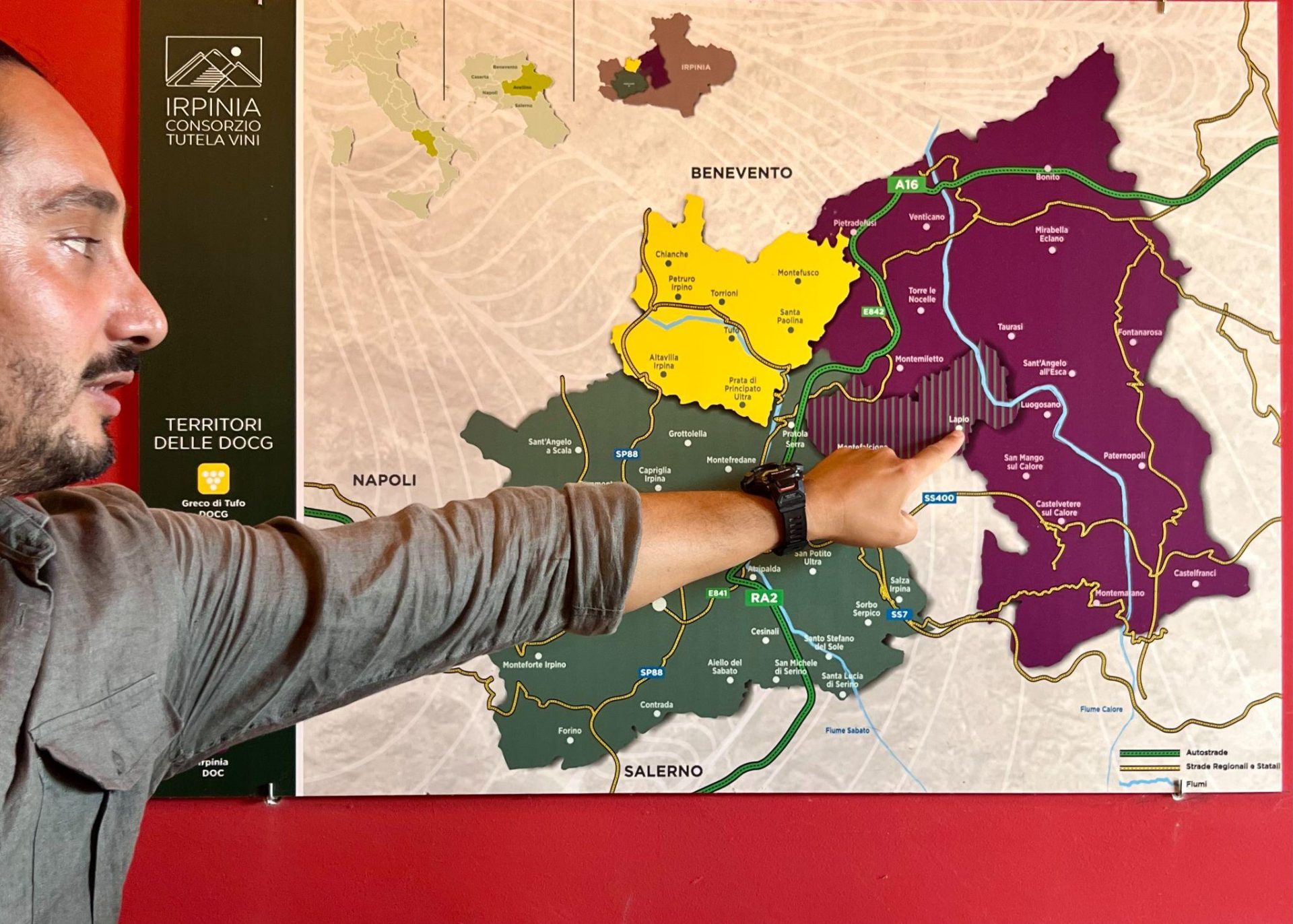
In the afternoon, we visited the Consorzio Tutela Vini d’Irpinia, which played a central role in making the Irpinia Wine Study Tour possible.
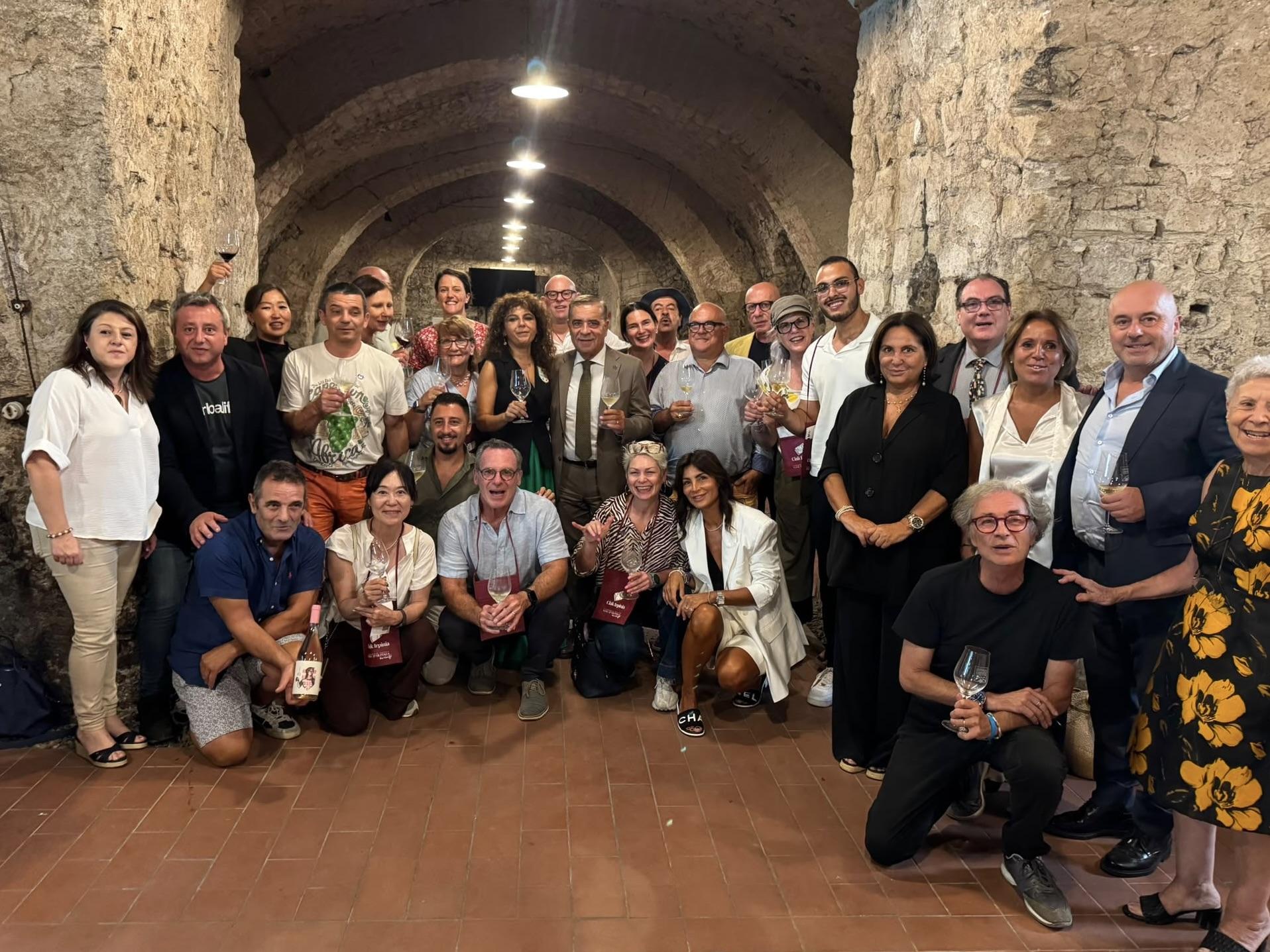
The official event, entitled “Il Tempo dell’Irpinia Vino, Cultura, passione” was jointly organized by the Provincia di Avellino and the Consorzio. It brought together representatives from local government, the wine industry and the wider community to welcome the 15 Italian Wine Ambassadors from the VinItaly International Academy.
The event opened with speeches by Fausto Picone, President of the Province of Avellino and Teresa Bruno, President of the Consorzio.
The message went far beyond “simply selling the wines of Irpinia.” The vision presented was to use wine as a central element connecting culture, tourism, local industries and even sport, promoting Irpinia itself as a distinctive regional brand both within Italy and internationally.
Picone placed emphasis on the importance of cooperation between the Consorzio and other institutions to promote Irpinia “at 360 degrees” encompassing not only wine but also the region’s culture and the excellence of its local businesses and products.
Teresa Bruno, meanwhile, stressed the need to build a strong network among public institutions, producers and local organizations, working together to communicate the value and identity of Irpinia.
One particularly interesting initiative was the combination of wine and sport as a tool for regional promotion. During the event, the new U.S. Avellino 1912 football jersey was presented, demonstrating how the national visibility of the football club could be used to promote Irpinia and its DOCG wines to a much wider audience. Angelo Antonio D’Agostino of U.S. Avellino 1912 also attended the event. It was a rather unique example of using sport as a platform to communicate the identity of a wine region.
The gathering not only included representatives of local municipalities but also those of other regions from Irpinia as well as members of law enforcement institutions and industry organizations. It was a much more formal and significant occasion than we had anticipated! Each of the 15 Italian Wine ambassadors were called individually to receive a “Irpinia passport”. As an additional surprise, we were also given passes which provided access to Sports Facilities for one year. Our relationship with Irpinia wasn’t meant to end with this visit. The message was clear: “Come back to Irpinia,” and, as Italian Wine Ambassadors, continue sharing the story of this region in our respective countries."
After the formalities, we enjoyed a walk-around tasting featuring producers from across the region. We tasted a wide range of wines, including Greco di Tufo DOCG, Fiano di Avellino DOCG, and Taurasi DOCG, while chatting directly with the producers. Displayed prominently at the venue were the words “IRPINIA: VINO, PASSIONE, CULTURA.” These three words perfectly capture the essence of this wine study tour with the Vinitaly International Academy. Wine serves as a gateway to understanding the land it comes from, the people, the culture, food tourism, and ultimately the identity of Irpinia itself.
It was an afternoon that gave us a much deeper understanding of how the region wants to portray itself to the world, crystallizing the Consorzio’s vision for building and communicating “Irpinia” as a regional brand.
Villa Raiano – Winery Visit and Dinner
Our final stop on Day 3 was at Villa Raiano, located in San Michele di Serino. Founded in 1996, the winery moved to its current premises in 2009.
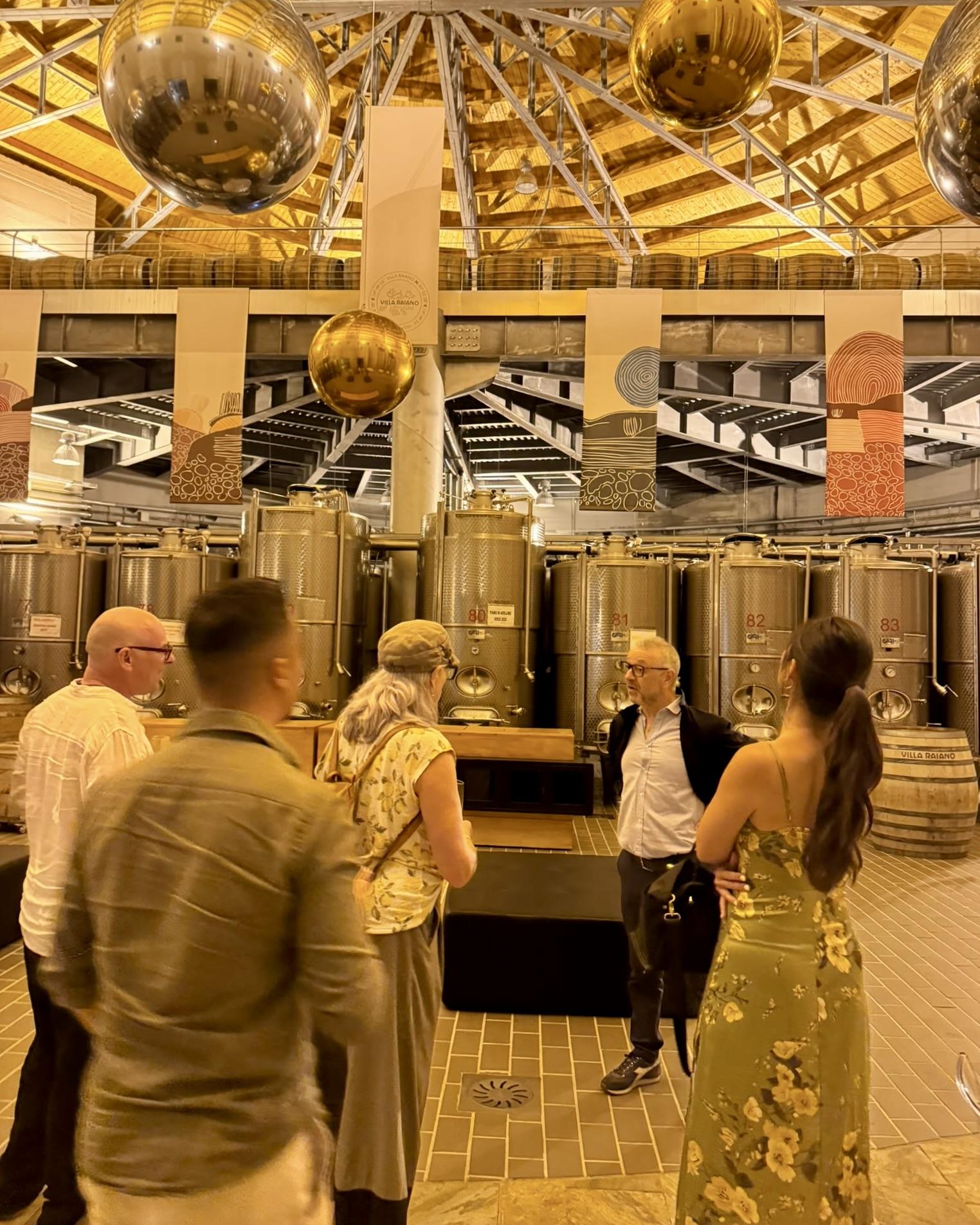
Upon arrival we were welcomed with Riba Bassa Spumante Extra Brut Metodo Classico. This traditionally made wine is a blend of Greco and Fiano grapes which has undergone 36 months aging on the lees. We then toured the state-of-the-art winery which utilizes low intervention and gravity fed winemaking.
The winemaking facilities blend seamlessly with the hospitality spaces. We were guided to an open kitchen where a selection of beautifully prepared finger foods was served. One of the most memorable was a miniature black bun filled with lightly seared rare tuna. The outside was gently seared while the center remained almost raw, leaving the tuna remarkably tender and succulent. The other appetisers were small but perfectly formed!
What came through particularly strongly at Villa Raiano is its deep commitment to Fiano and the determination to exploit this variety’s full potential. The winery expresses the individuality of different sites through single vineyard wines while also focusing on the ability of Fiano to age and gain complexity.
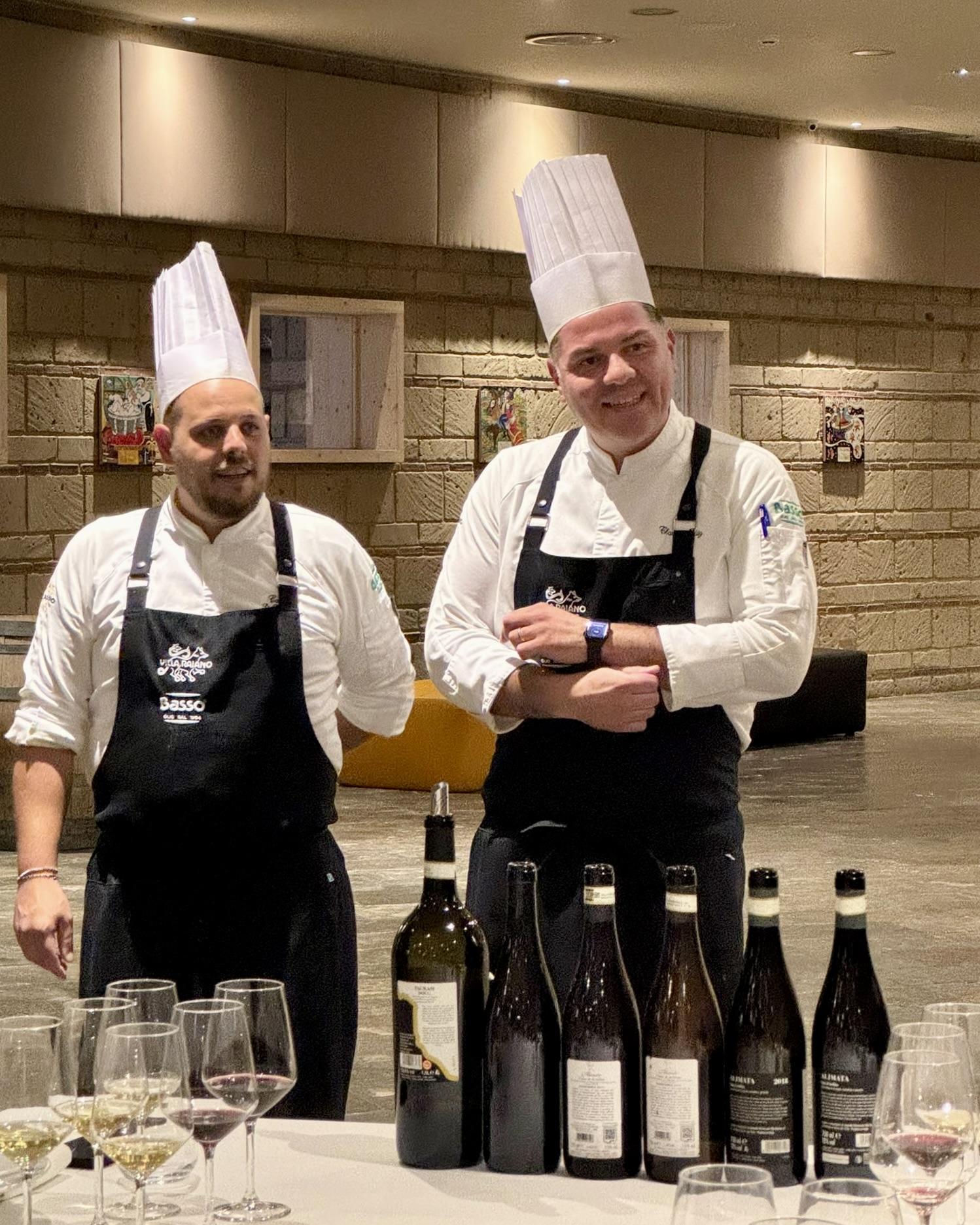
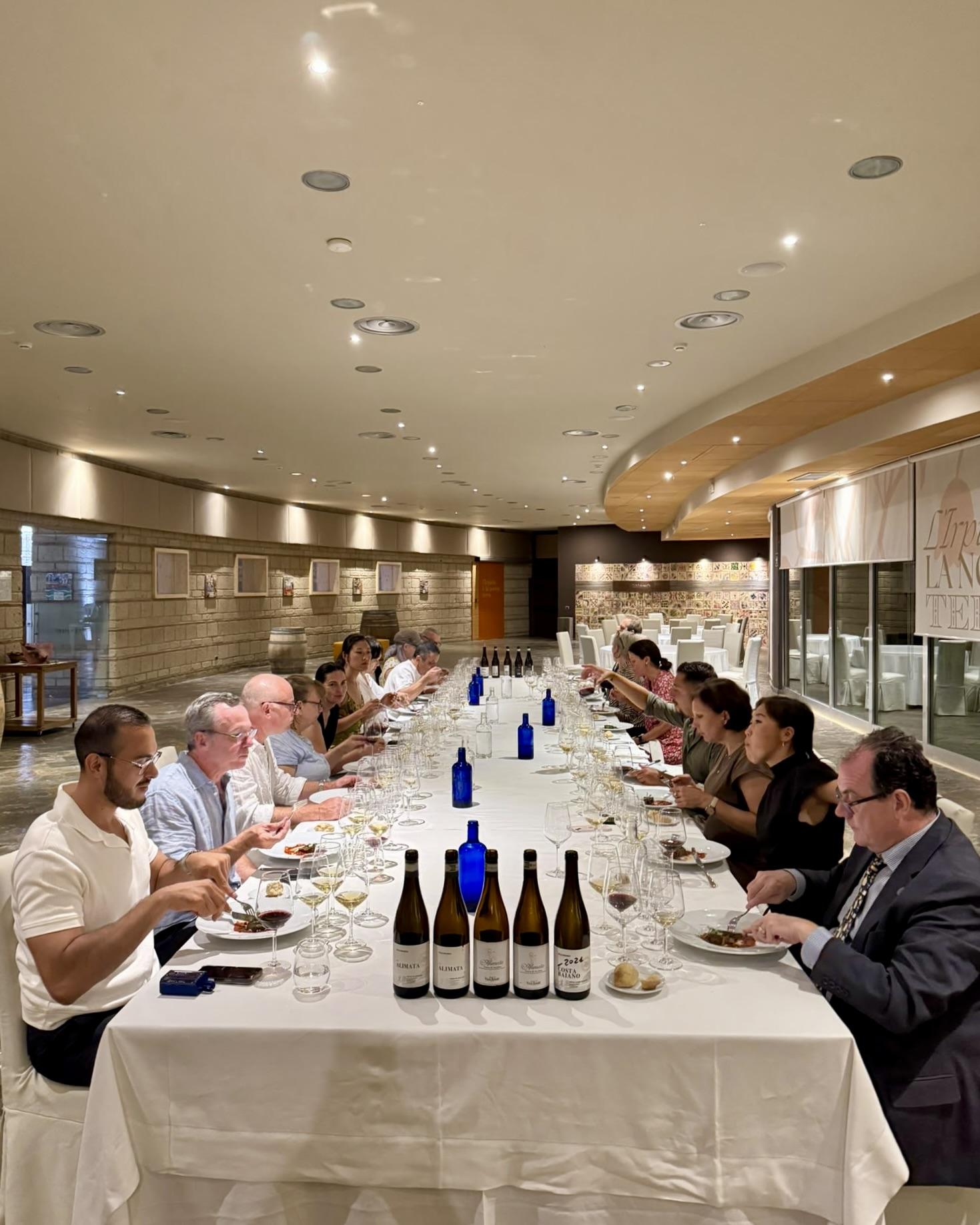
We tasted several vintages of Alimata Fiano di Avellino DOCG from a single vineyard in Montefredane. Tasting the different vintages side-by-side clearly demonstrated that Fiano was not simply a variety to be enjoyed for its youthful fruit and aromatics but a wine capable of evolving and developing considerable complexity over time. Alongside the multiple vintages of Alimata, the dinner continued with Costa Baiano Irpinia Campi Taurasini DOC made from Aglianico followed by Taurasi Riserva 2016 DOCG, which provided us with a broad perspective on the style from Villa Raiano.
The cuisine was contemporary and refined in presentation yet remained focused on allowing the quality and character of the ingredients to speak for themselves. Rather than simply serving wine alongside food, the dinner felt designed to create an integrated experience between the two.
The chef joined us at the end of the evening bringing together the cuisine, wine and hospitality that defined the world of Villa Raiano. It was a fitting conclusion to day three and, above all, a visit that reinforced our appreciation of Fiano’s ability to express terroir and its remarkable potential for aging.
Another day of discovering the incredible diversity, history and identity of Campania through its wines, landscapes, people and food. This was the third day of our trip to Irpinia. Follow the links to read about Day 1 and Day 2.
Learn more about the Vinitaly International Academy and listen to our series of Ambassador interviews with their favorite producers here.


